


Self-Heating LiFePO4 Batteries Compared 2026: LiTime, Power Queen and Vatrer for Winter Camping
How self-heating LiFePO4 batteries warm up before charging, what the heater costs in energy, which charge current starts it, and four models compared on manufacturer data.
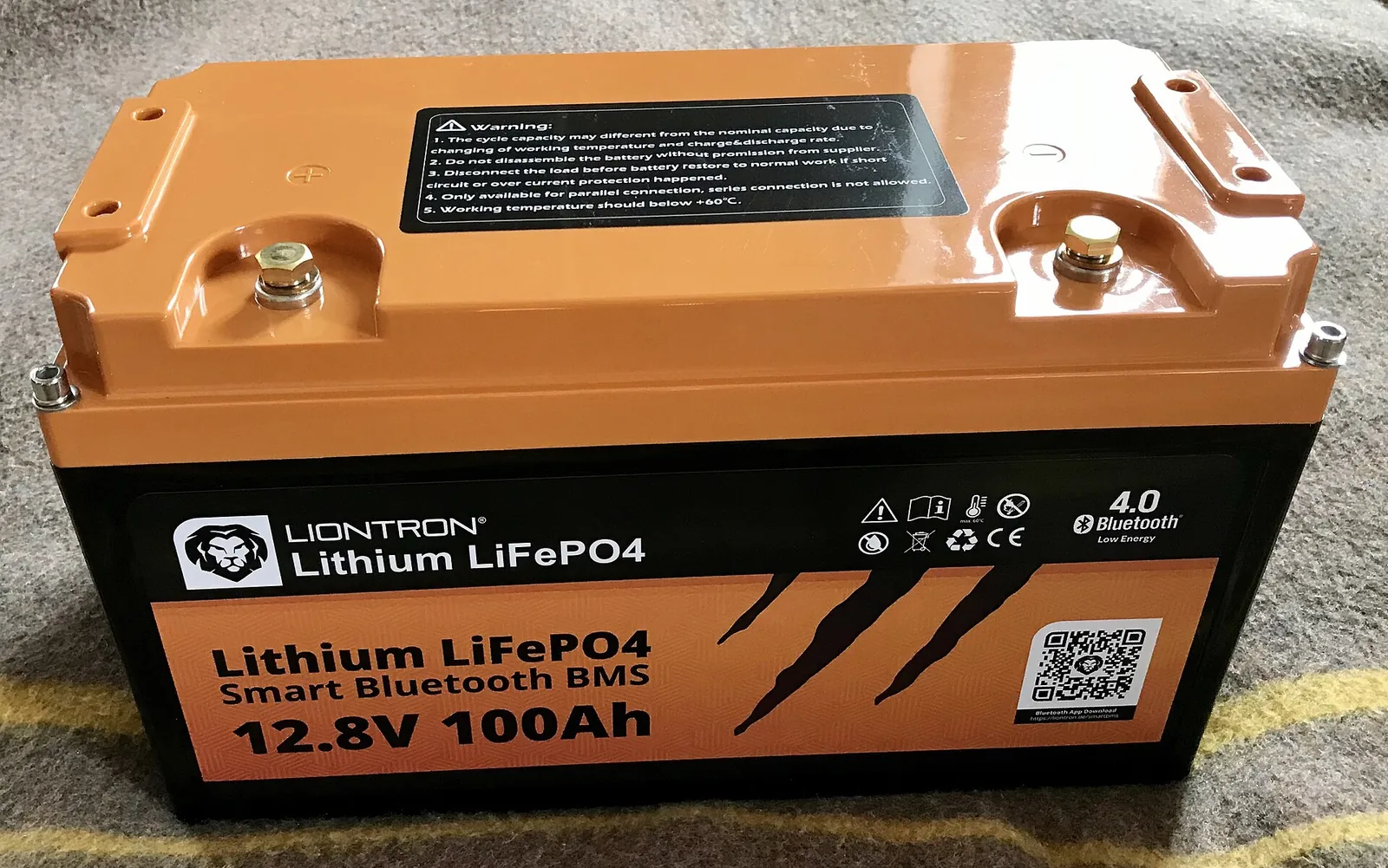
A LiFePO4 battery must not be charged below 0 °C, and from November that is the normal state of a battery in an outside locker, a rear garage or a boat. Self-heating batteries solve this with heating pads inside the case: the battery warms its own cells before it lets charge current in. Search interest for "self heating lithium battery" more than doubled in the week to 2 November 2026 (Google Trends: 187 vs 73 in the week before), and in the 30 days to the same date, readers of our Ah to Wh converter clicked through to shop for a LiFePO4 battery 154 times.
This is a researched guide, not a hands-on test: we have not measured these batteries ourselves. All figures come from the manufacturers' product pages and manuals, and where a manufacturer does not publish a value, the table says so.
The short version
- A self-heating battery does not charge below 0 °C either. It first uses charge current to run its heater, and only charges once the cells are warm, typically at 5 to 10 °C.
- Most models only heat while a charger is connected, and some need a minimum charge current: 10 A for the LiTime, 15 A for the European Power Queen. A small solar array in December may never reach that.
- Heating costs energy. With a 100 W heater and 30 to 90 minutes from -10 °C, one warm-up uses roughly 50 to 150 Wh before any charge goes in.
- If the battery can live inside the heated cabin, that is still the cheaper fix. Our article on LiFePO4 cold charging explains the background.
How a self-heating battery works
Inside the case sit heating pads, usually against two sides of the cell pack, plus temperature sensors read by the battery management system (BMS). When a charger is connected and the cells are too cold, the BMS keeps the charge path to the cells closed and sends the charger's current to the heater instead. Once the cells reach the stop temperature, the heater switches off and normal charging begins. Discharging is not affected: all four batteries below can supply power down to about -20 °C.
Four self-heating batteries compared
| LiTime LiHeat 12V 100Ah Group 24 | Power Queen 12V 100Ah Self-Heating | Vatrer 12.8V 100Ah Self-Heating | Vatrer 12.8V 460Ah Self-Heating | |
|---|---|---|---|---|
| Energy | 1280 Wh | 1280 Wh | 1280 Wh | 5888 Wh |
| Heater power | 100 W | 100 W | not published | not published |
| Heating starts | -20 to 5 °C | at or below 0 °C | below 0 °C | at or below 0 °C |
| Heating stops | 10 °C | 5 °C | above 5 °C | above 5 °C |
| Heater supplied by | charger; optional mode also uses the battery | charger | not published | charger |
| Minimum charge current | 10 A | 15 A | not published | not published |
| Heating time from -10 °C | 70-90 min | 30-60 min (at 15 A) | not published | not published |
| BMS continuous | 100 A | 100 A | 100 A | 300 A |
| Bluetooth app | yes | no | yes | yes |
| Size, weight | 260 x 168 x 210 mm, 10.3 kg | 329 x 172 x 214 mm, 10.38 kg | 329 x 172 x 214 mm, 11 kg | 477 x 273 x 252 mm, 47.5 kg |
| Version | US | EU | EU | EU and US |
Sources: LiTime product page and manual (August 2025), Power Queen EU product page and manual, Vatrer product pages for the EU 100 Ah and the 460 Ah models, all checked on 2 November 2026. Power Queen's own documents disagree slightly: the EU product page says heating starts at or below 0 °C, the manual gives -20 to 5 °C. The US Power Queen version stops heating at 10 °C and needs only 10 A, so check which version you are buying.
The catch: minimum charge current
The heater runs on the charger's current, and the BMS only starts it when enough current arrives. LiTime states at least 10 A for its regular heating mode, Power Queen at least 15 A for the European version and recommends a 20 A charger rather than a 10 A one.
That matters most for solar in winter. 10 A at about 14 V is 140 W of charge power. A 200 W panel would have to deliver 70 % of its rating for that, which needs strong direct sun, rare in a central European December, so the heater may simply never start from solar alone. Charge sources that reliably deliver enough current are:
- The alternator through a DC-DC charger. The Victron Orion XS 12/12-50A delivers up to 50 A while driving, the Orion-Tr Smart 12/12-30 30 A. Our DC-DC charger comparison covers the alternatives.
- Shore power through a mains charger, for example the Victron Blue Smart IP22 12/30 with 30 A.
LiTime's second, energy-efficient mode is the one exception in this list: when the charger delivers less than 10 A, it adds the battery's own energy to the heater, and it can also heat from the battery alone, as long as the state of charge is above 20 %. That helps with a weak solar input, but it spends stored energy.
What heating costs in energy
The heater's energy does not end up in the battery. As a rough budget from the manufacturers' figures:
- LiTime, 100 W for 70 to 90 minutes from -10 °C: about 117 to 150 Wh, roughly 9 to 12 Ah at 12.8 V.
- Power Queen EU, 100 W for 30 to 60 minutes from -10 °C at 15 A: about 50 to 100 Wh, roughly 4 to 8 Ah.
For comparison, the efficient compressor fridge in our 12V fridge guide uses about 18 Ah per day. One warm-up per day is affordable on a drive or on shore power. If the battery cools down again overnight, the next charge session starts with heating again, so a well-insulated battery box pays off. The charge time calculator shows how long your charger needs to refill the battery; add the heating time on top.
Charger settings that stop the heater
A self-heating battery needs the charger to keep supplying current while the cells are cold. Two settings can prevent that:
- The charger's own low-temperature cut-off. Victron's SmartSolar MPPT controllers and the Orion XS can stop charging at low battery temperature. That protects batteries without a heater, but it also starves the heater. With a self-heating battery, let the battery's BMS decide and check your charger manual for how its cut-off is configured.
- A charge current set too low. If you turned a DC-DC charger down to protect a small alternator, make sure it still delivers at least the battery's minimum heating current.
Monitoring in winter
A shunt-based battery monitor shows what actually flows in and out, which makes winter problems visible: if the battery reads 0 A at the terminals while the charger shows output, something between them is blocking. The Victron BMV-712 Smart has a display, Bluetooth and an auxiliary input that can take Victron's optional temperature sensor, so you see the battery temperature next to the current. The Renogy 500A battery monitor is a simpler display unit without Bluetooth; Renogy rates its display for -10 to 60 °C, so mount it inside the living space.
One thing to keep in mind: the heater sits inside the battery, behind the shunt. A shunt therefore counts the heater's current as charge going in, and after long heating periods the displayed state of charge can read too high until the monitor resynchronises at the next full charge.
Which battery for which build
- Van or RV in North America with a Group 24 box: the LiTime LiHeat 12V 100Ah is the only one here with two heating modes, and it publishes heating times from both -10 °C and -20 °C.
- European camper with a mains charger or a DC-DC charger of at least 20 A: the Power Queen 12V 100Ah Self-Heating publishes the shortest heating time in this list, but has no Bluetooth and needs at least 15 A to start heating.
- European camper that wants an app: the Vatrer 12.8V 100Ah Self-Heating has Bluetooth and the same 329 x 172 x 214 mm footprint as the Power Queen. Vatrer does not publish heater power, heating time or minimum current for this model, so ask the seller before relying on it in a cold locker.
- Motorhome with a large inverter: the Vatrer 12.8V 460Ah Self-Heating stores about 5.9 kWh in one metal-cased unit with a 300 A BMS and heats from the charge input only. At 47.5 kg it needs a floor mount rated for the weight.
Our direct links go to Amazon US for the LiTime, to Amazon Germany for the Power Queen, and to the German, French, Spanish and Italian stores for both Vatrer models (the 460 Ah also to Amazon US); elsewhere the link opens an Amazon search for the model. Prices for all four vary a lot between stores and sales, so check the current price at the retailer.
Plan it in the diagram
Put the battery, chargers, battery monitor and fuses into the free VoltPlan diagram editor. It sizes cables and fuses for the charge and discharge currents, so you can check that the DC-DC or mains charger really delivers the current the battery needs to start heating.
FAQ
Does a self-heating LiFePO4 battery drain itself in the cold?
Most do not. The Power Queen and both Vatrer batteries in this comparison only heat while a charger is connected and powered from that charger. The LiTime battery has an optional energy-efficient mode that can also heat from its own energy, but only above 20 % state of charge.
Can I charge a self-heating battery with solar in winter?
Yes, if the solar charger delivers the battery's minimum heating current, 10 A for the LiTime and 15 A for the European Power Queen. A small array in midwinter often delivers less, so plan alternator or shore charging as well.
At what temperature does a self-heating battery start heating?
Usually around 0 °C. LiTime gives -20 to 5 °C, Power Queen EU and Vatrer at or below 0 °C. The heater stops at 5 °C (Power Queen EU, Vatrer) or 10 °C (LiTime), and charging begins after that.
How long does a self-heating battery take to warm up?
From -10 °C, LiTime states 70 to 90 minutes and Power Queen 30 to 60 minutes at 15 A. From -20 °C, LiTime gives 100 to 150 minutes and Power Queen 70 to 100 minutes. Vatrer does not publish heating times.
Can I discharge a LiFePO4 battery below 0 °C?
Yes. All four batteries here allow discharging down to about -20 °C. The limit applies to charging, which is why a cold battery runs your loads normally but refuses a charge.
Is a self-heating battery better than keeping the battery in the cabin?
Not if the battery can live inside the heated space; that keeps it warm without spending energy or money on a heater. A self-heating battery is the answer when the battery has to sit somewhere cold, such as a boat locker or an outside battery box, and still needs to charge there.
This article was created with the assistance of AI.
Ready to Design Your Electrical System?
Use VoltPlan's free electrical system designer to turn these concepts into reality.
Start Your Project