


12V Camper, RV & Caravan Wiring Diagram
Three free worked examples of 12V wiring for campers, RVs, motorhomes, and caravans -- with correct fuse placement and wire sizing. From a simple weekender to solar-and-shore-power builds with a 230V charger, all the way to a full off-grid van with alternator charging. Use the builder at the bottom to design your own.
1. Basic 12V Camper Wiring (Weekender)
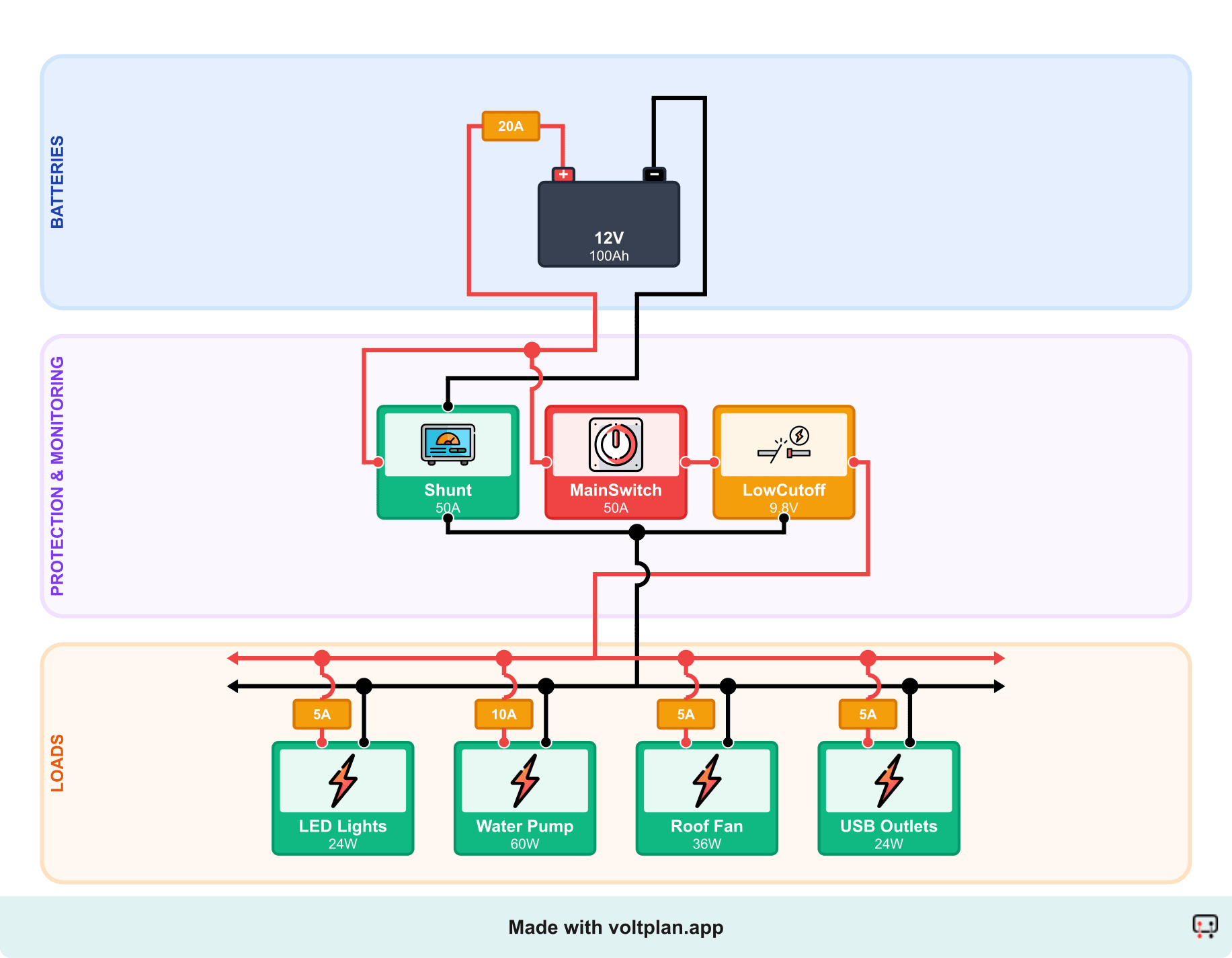
The simplest camper electrical setup: a single 100Ah AGM leisure battery feeding LED lights, a water pump, a roof fan, and USB outlets. A main fuse at the battery protects the main feed, and each circuit gets its own blade fuse at the distribution panel. No solar, no shore power -- you charge the battery by driving or with a mains charger when at home.
2. Camper Wiring with Solar and Shore Power
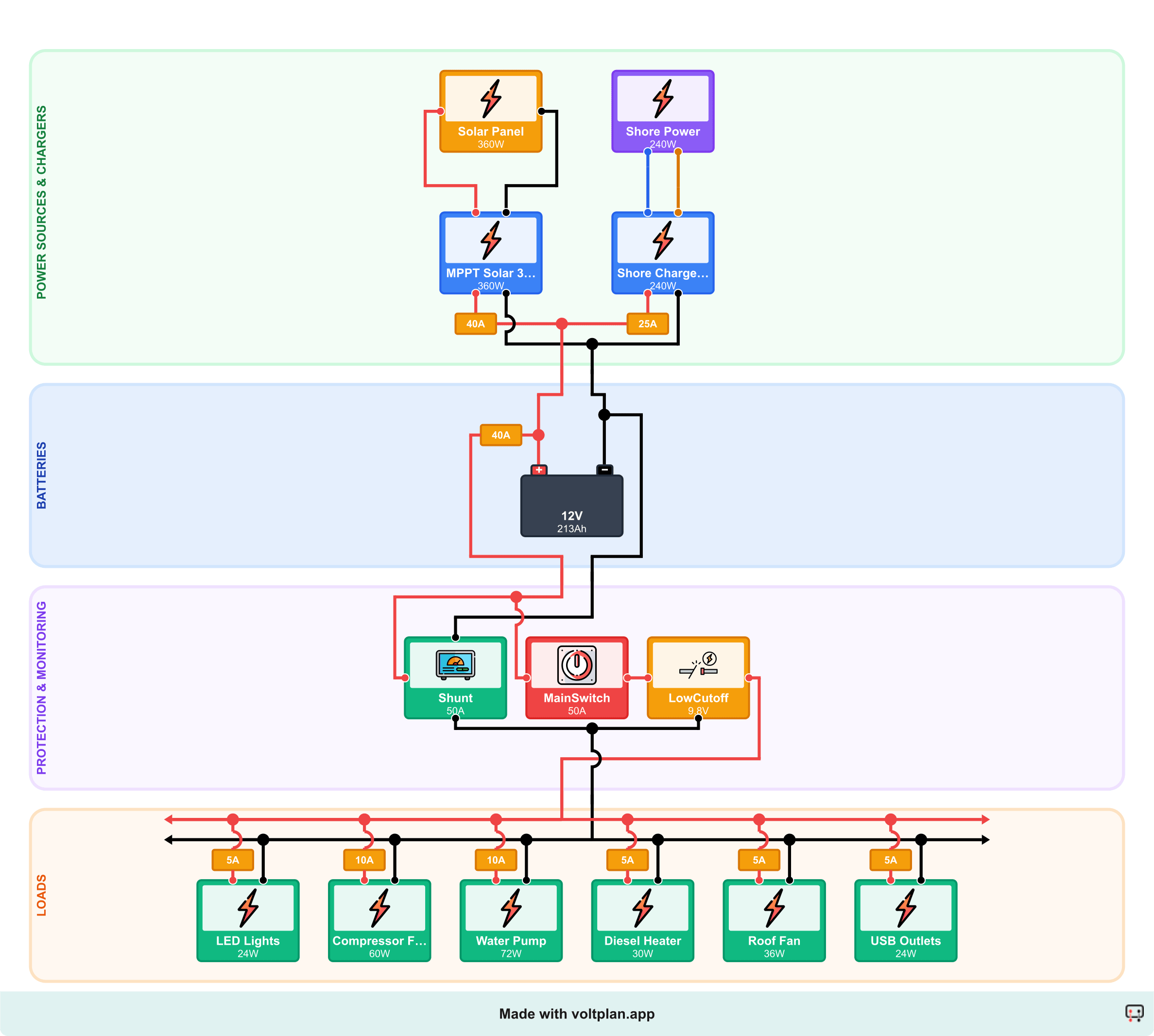
A weekend-and-holiday camper with a 200Ah LiFePO4 battery, 360W of solar feeding a 30A MPPT charger, and a 20A shore power charger for campsite nights. The battery powers a compressor fridge, diesel heater, water pump, lights, and fan. This is the most common mid-range camper build.
3. Full Off-Grid Camper with Alternator Charging
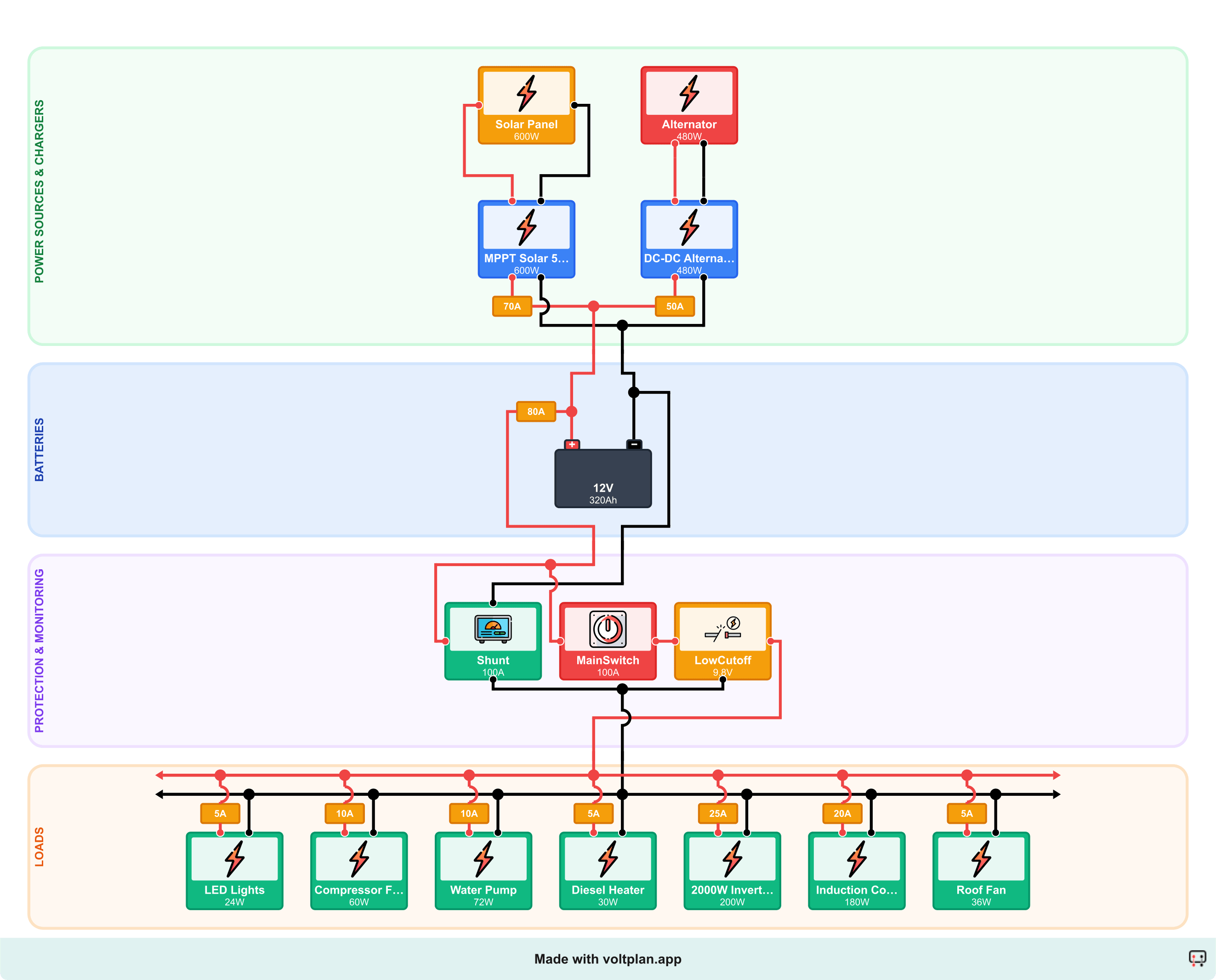
A full vanlife build for long-term off-grid use: 300Ah LiFePO4 battery, 600W solar with a 50A MPPT, and a 40A DC-DC charger from the vehicle alternator. Enough capacity for a compressor fridge, diesel heater, induction cooker, and a 2000W inverter for occasional AC loads -- all without ever needing a campsite hookup.
Design Your Own Camper Wiring Diagram
VoltPlan is a free online electrical diagram builder for campers and vans. Pick your components, drag them into place, and get automatic wire sizing, fuse placement, and a printable diagram -- no signup required to start.
Open the Diagram BuilderHow to Read a Camper Wiring Diagram
Every camper wiring diagram follows the same left-to-right structure: charging sources on the left (solar, shore power, alternator), the house battery in the middle, protection and monitoring components, and loads on the right. Current flows from each charger through its own fuse into the battery positive, then out through a main fuse to the distribution panel that feeds individually fused load circuits.
AGM vs LiFePO4 for Campers
AGM is cheaper upfront and fine for weekend use, but only about 50% of the rated capacity is usable before damage. LiFePO4 costs more but gives you ~80% usable capacity, 5-10× the cycle life, and charges faster. For anything more than occasional weekend trips, LiFePO4 is worth the premium.
Why a DC-DC Charger Instead of Direct Alternator?
Modern vehicles use smart alternators that lower output once the starter battery is full, which never fully charges a LiFePO4 house battery. A DC-DC charger takes whatever voltage the alternator provides and produces a correct multi-stage charge profile -- required for lithium, and a good idea even for AGM on long battery runs. Always fuse both input and output sides at the source.
Inverter Wiring Is the Riskiest Part
A 2000W inverter at full load draws around 170A at 12V. That needs 35-50mm² (2-1/0 AWG) cable, kept as short as possible, with a Class T fuse at the battery positive terminal. Inverters are the leading cause of camper electrical fires -- treat their wiring with extra care. Use the wire gauge & fuse calculator to size the run precisely.
Frequently Asked Questions
What size battery for a 12V camper?
A weekend camper with lights, water pump, and a fan typically needs 100Ah of AGM or 80Ah of LiFePO4. Full-time vanlife with a compressor fridge, diesel heater, and devices usually needs 200-300Ah of LiFePO4. Lithium gives you ~80% usable capacity versus ~50% for AGM, so 200Ah LiFePO4 roughly equals 300-400Ah AGM.
Do I need solar on a camper van?
Solar is optional but strongly recommended for off-grid stays longer than 2-3 days. A 200-400W roof panel with a 20-30A MPPT charger keeps a 200Ah LiFePO4 topped up for most builds. If you mostly drive between stops, a DC-DC alternator charger can replace or supplement solar.
What is a DC-DC charger and do I need one?
A DC-DC charger takes 12V from the vehicle alternator and produces a clean multi-stage charge profile for your house battery. You need one if you have a lithium house battery -- modern smart alternators cannot charge LiFePO4 correctly on their own. A 30-50A DC-DC charger is typical for camper vans.
Can I run a fridge and inverter off a 12V battery?
Yes. A 60W compressor fridge draws about 5A at 12V -- well within range of a 200Ah LiFePO4. A 2000W inverter at full load draws 170A, so it needs heavy cable (35-50mm² / 2-1/0 AWG) and a Class T fuse at the battery. Size the battery and wiring for peak load, not average draw.
What fuses does a camper electrical system need?
Every positive wire leaving the battery needs a fuse at the battery terminal: a main fuse (typically 100-200A), one fuse per charger output (30-60A), and one fuse per load circuit at the distribution panel (5-20A each). The inverter gets its own Class T fuse sized to its cable, not its output power.
Related Resources
12V Boat Wiring Diagram Examples
Three worked examples of 12V boat wiring: basic, shore power, and sailboat with solar.
Wire Gauge & Fuse Calculator
Size wires and fuses for every circuit in your camper. Supports AWG and mm².
12V Fuse Sizing Guide
Complete guide to calculating fuse sizes, fuse types, and placement rules.
Fuse Sizing Cheat Sheet
Printable quick-reference card with fuse sizes for 20+ common camper devices.
Full Diagram Builder
Design your complete camper electrical system with automatic wire sizing and fuse placement.