


EcoFlow DELTA Pro 3 as a Camper Power System: Specs, Limits, and Who It Actually Fits
4096 Wh LiFePO4, 4000 W inverter, 2600 W solar input: what the EcoFlow DELTA Pro 3 replaces in a camper build, what it can't, and what independent tests found.
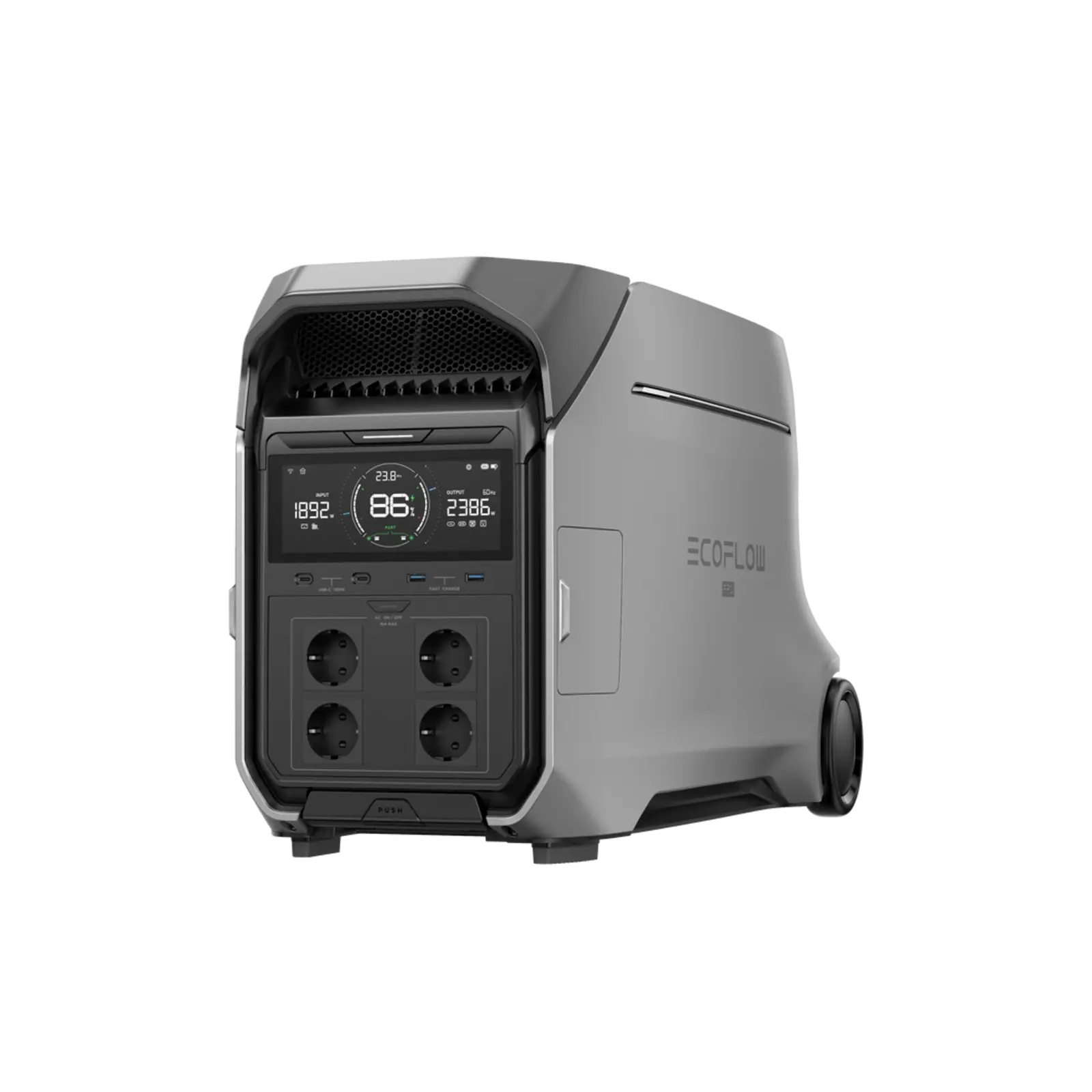
A camper electrical build normally means four separate purchases: a battery bank, an inverter, an MPPT solar charge controller, and an AC charger — plus the bus bars, fuses, and cable runs to connect them. The EcoFlow DELTA Pro 3 puts all four in one sealed box. The obvious question for anyone planning a van or camper setup: can this one unit replace that entire build, and for whom does that trade actually make sense?
To be clear up front: we have not tested this unit ourselves. This is a researched buying guide based on the manufacturer's specifications and independent test reports from outlets like heise, ComputerBase, and OutdoorGearLab, which are cited below.
If you haven't yet decided whether a portable station is the right architecture for you at all, start with our full comparison of portable power stations vs. built-in systems. This post assumes you're leaning toward an all-in-one and asks the narrower question: is this the one?
Why this model, specifically
Most portable power stations top out at 1-2 kWh and a 1500-2000 W inverter. That covers a weekend of lights, phones, and a laptop. It does not cover an induction hob, a full-time compressor fridge, or an electric kettle without careful load juggling.
The DELTA Pro 3 sits in a different class. With 4096 Wh of LiFePO4 capacity and a 4000 W continuous pure sine inverter, it is one of the few portable units with numbers that genuinely overlap a small built-in system. That makes it a candidate not just for weekend trips, but for full-time van life — the use case OutdoorGearLab flagged when it picked the unit as a top choice for RV and van use.
The word "portable" needs an asterisk. At roughly 51.5 kg, this is not something you carry to a picnic table. EcoFlow fitted a trolley handle and wheels for a reason. It is portable the way checked luggage is portable: you can move it between a garage, a van, and a house, but it lives in one place at a time.
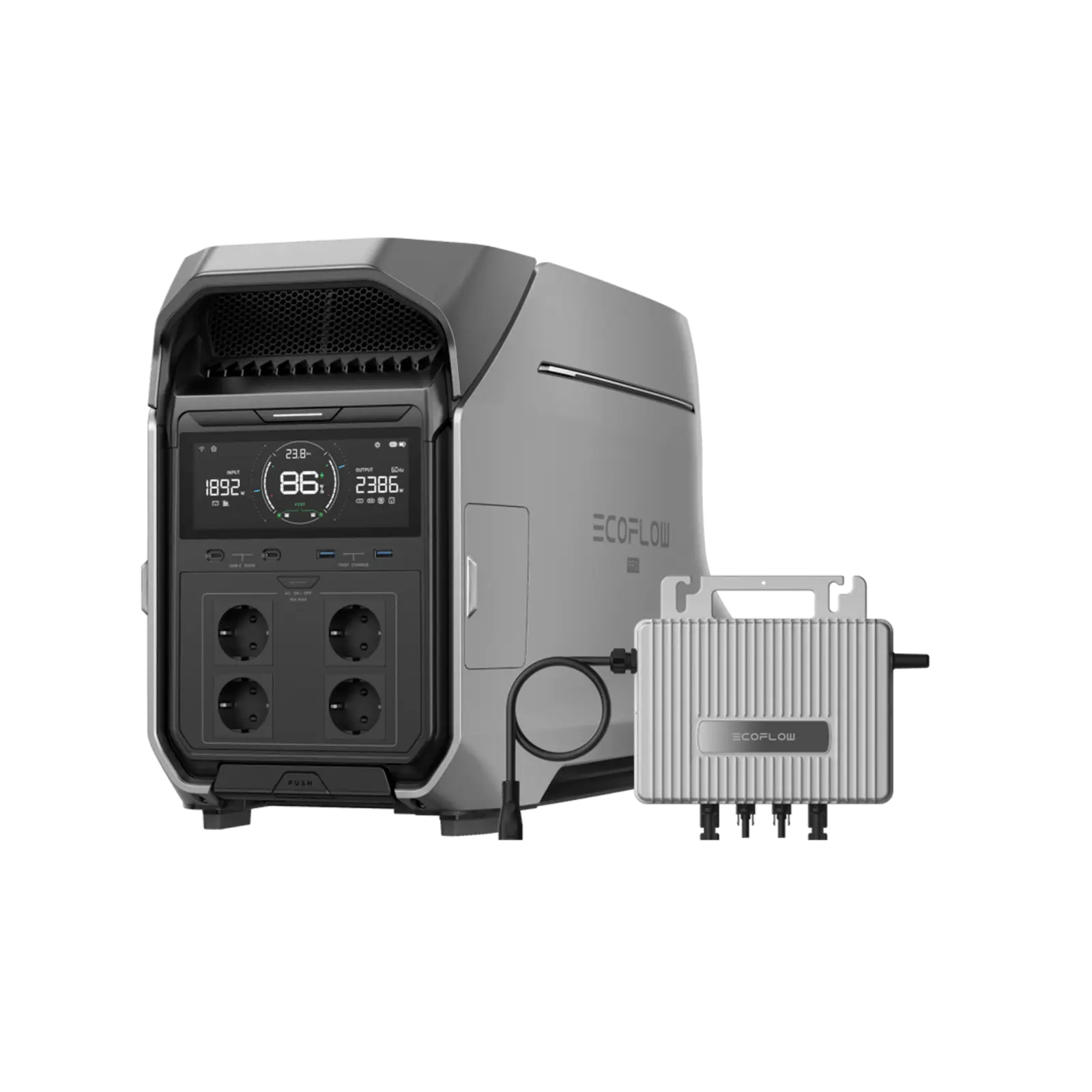 Photo: EcoFlow
The specs that matter for a camper
Capacity and expandability
4096 Wh usable LiFePO4 capacity is the base. For reference, that is roughly what a built-in 12 V / 320 Ah battery bank stores. If that turns out to be too little, EcoFlow's Smart Extra Batteries extend the system to 12 kWh, and with additional units and smart generators up to 48 kWh. The expansion path matters: you can start with the base unit and add capacity later without rewiring anything, which is exactly the flexibility a component build makes harder.
Inverter: 4000 W continuous, and what X-Boost is not
The inverter delivers 4000 W continuous pure sine output with an 8000 W surge rating for motor start-up loads. That runs an induction hob, a coffee machine, or a small air conditioner without drama.
EcoFlow also advertises "X-Boost" up to around 6000 W. Read that carefully: X-Boost is a software overload mode that reduces the voltage delivered to resistive loads so a nominally-too-large heater or kettle still runs, slower. It is not a 6000 W continuous rating, and it does not work with electronics that need stable voltage. The honest number to plan with is 4000 W.
Solar input: 2600 W across two MPPT trackers
This is the spec that stands out for camper use. The DELTA Pro 3 accepts up to 2600 W of solar input, split across two independent MPPT trackers (1600 W + 1000 W) — the highest solar input in EcoFlow's portable line. Two independent trackers mean you can run, say, fixed roof panels on one input and a folding ground array on the other, each tracked at its own maximum power point.
Why it matters: a 4 kWh battery that recharges slowly is a one-day battery. With 1000-1500 W of real-world panel output on a decent day, the DELTA Pro 3 can recover most of a day's consumption while you're parked — which is the difference between a system that supports off-grid living and one that needs a campsite hookup every second night.
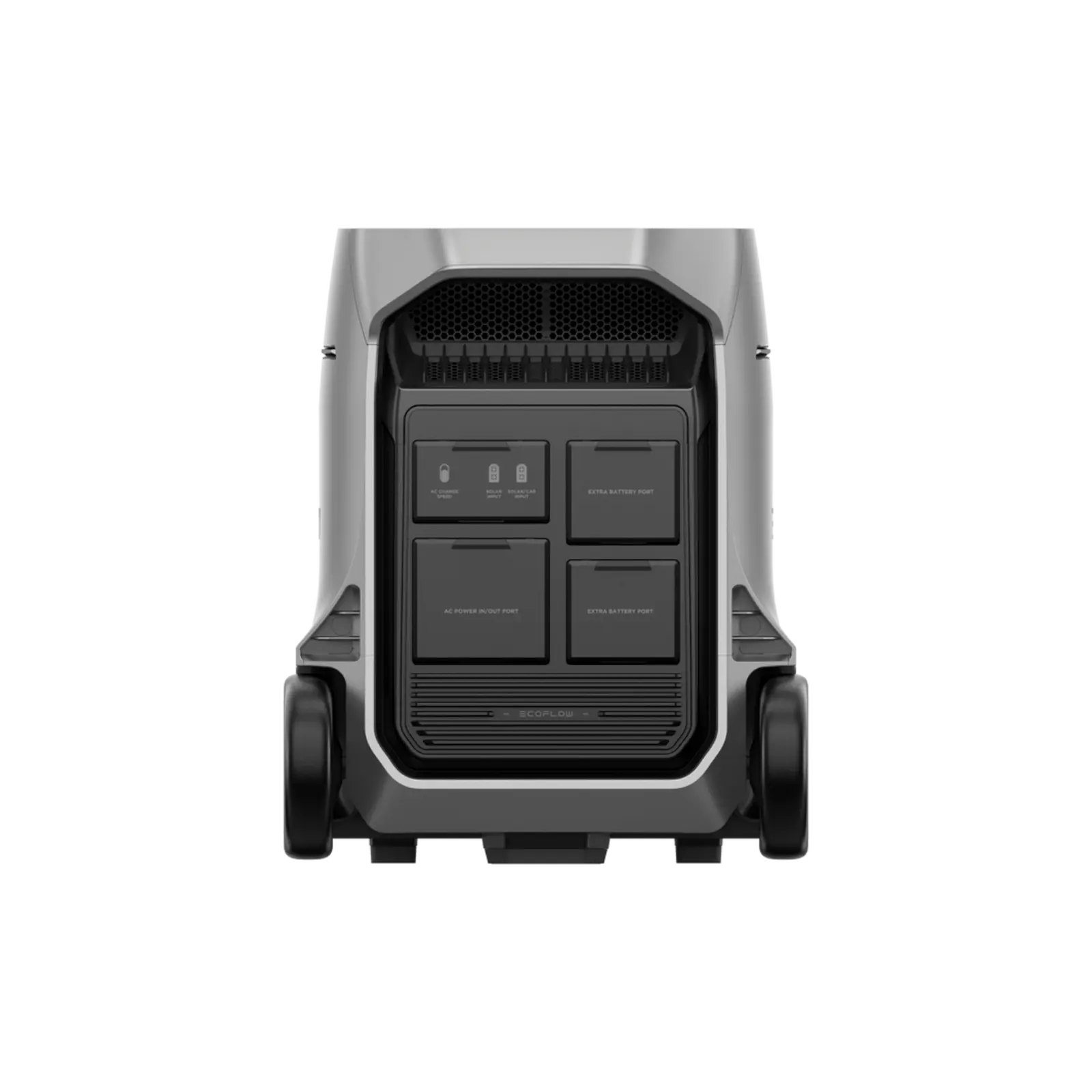 Photo: EcoFlow
AC charging, cycle life, durability
From a wall socket, EcoFlow's X-Stream 3.0 charging takes the unit from 0 to 100 % in about 2.7 hours. Before a trip, or during a lunch stop at a serviced site, that is fast enough to matter.
The LiFePO4 pack is rated for 4000 cycles to 80 % remaining capacity — at a full cycle per day, that is roughly eleven years before the pack drops to 80 %. The battery pack is IP65 rated against dust and water jets and UL9540 certified as an energy storage system. EcoFlow backs the unit with a 5-year warranty, which is longer than the 2-3 years common in this category.
Who it is not a good fit for
Two groups should look elsewhere.
Anyone who wants proper 12 V circuits. A camper typically runs its fridge, water pump, lighting, and roof fan on fused 12 V circuits from a distribution panel. A power station gives you AC outlets and, typically, a single 12 V socket plus USB ports — there is no distribution panel, no individual circuit fusing, no clean way to wire six permanent 12 V consumers. You can work around it, but at that point you are fighting the product's design.
Anyone on a tight budget. A component build with a 100-200 Ah LiFePO4 battery, a mid-size inverter, and an MPPT controller can land well under this unit's price — at the cost of your own planning and installation time. The trade-offs are laid out in the portable vs. built-in comparison; if the budget is the deciding factor, read that first.
What independent tests found
heise/TechStage ran the DELTA Pro 3 through a power-station comparison test against units from Aferiy, Fossibot, and others, and named it their top pick overall. Their dedicated test report goes into the measured detail.
ComputerBase's full test covers charging behavior, efficiency, and the app ecosystem from a more technical angle.
On the camper-specific side, OutdoorGearLab reviewed it as a top pick for RV and van use, and Outdoor Life included it in their 2026 roundup of the best portable power stations. The consistent picture across outlets: strong inverter performance, class-leading solar input, and the weight as the main practical complaint.
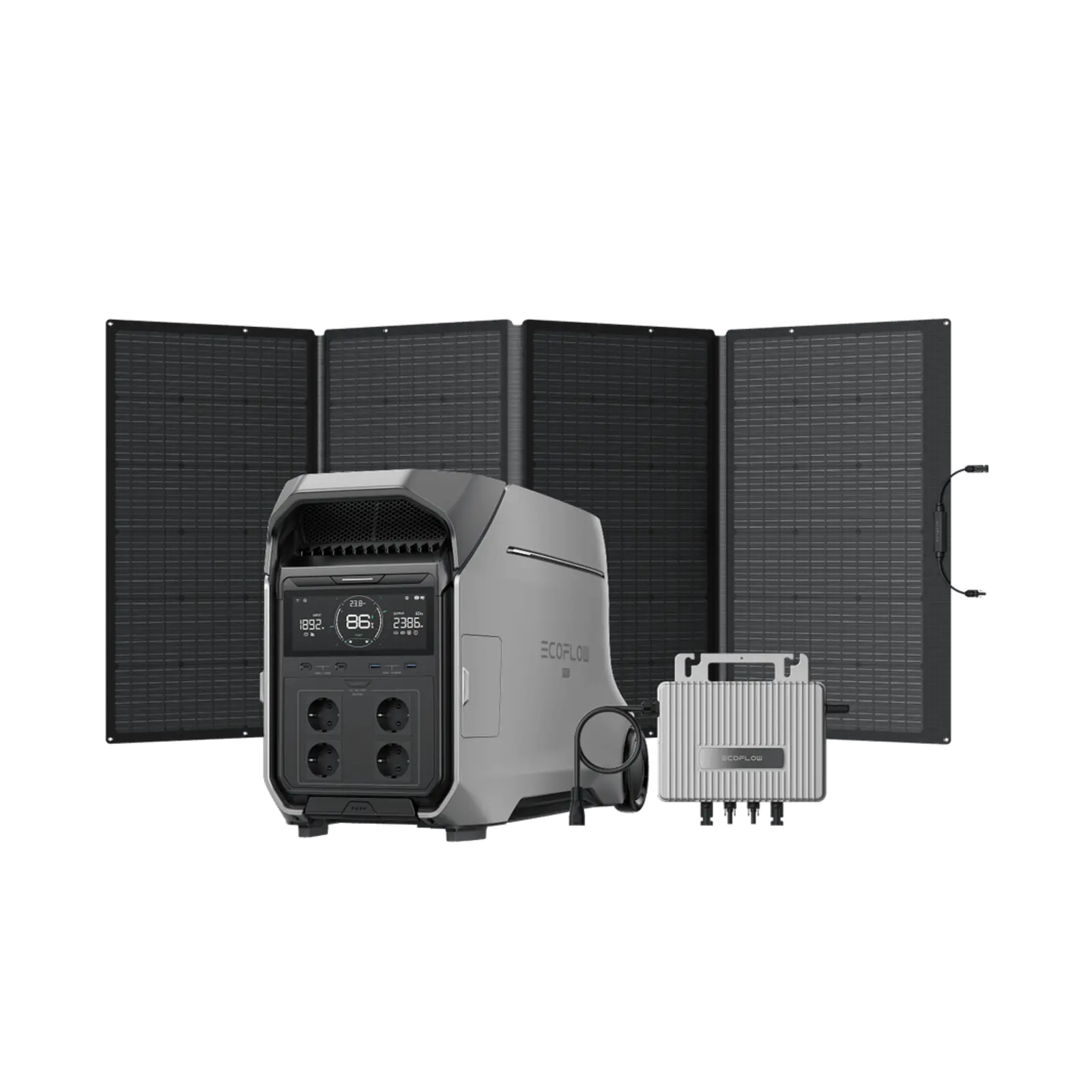 Photo: EcoFlow
Specs at a glance
| Spec | EcoFlow DELTA Pro 3 |
|---|---|
| Capacity | 4096 Wh LiFePO4, expandable to 12-48 kWh |
| AC output | 4000 W continuous (pure sine), 8000 W surge |
| Solar input | 2600 W total, dual MPPT (1600 W + 1000 W) |
| AC charge time | 0-100 % in approx. 2.7 h (X-Stream 3.0) |
| Cycle life | 4000 cycles to 80 % capacity |
| Weight | approx. 51.5 kg, trolley handle and wheels |
| Warranty | 5 years |
Price and availability
List price sits roughly in the $2,999-3,699 / €3,000-3,600 range, but EcoFlow runs frequent bundle deals and sales, so the street price moves around a lot — quoting one fixed number here would be misleading. The EcoFlow DELTA Pro 3 is sold on Amazon in Germany, France, Spain, Italy, the UK, and the US; it is the same physical unit with regional plug and certification variants. Check the current price before deciding — the gap between list and promo pricing is regularly several hundred euros.
Verdict
The DELTA Pro 3 is the right buy for one specific person: someone building out a camper or van for serious use who wants to skip the design, wiring, and fusing of a component system, and whose loads run on 230 V/120 V AC rather than a web of 12 V circuits. For that person, the EcoFlow DELTA Pro 3 is the strongest all-in-one currently available — the 2600 W dual-MPPT solar input and 4 kWh base capacity are what separate it from the rest of the category, and independent tests back the on-paper numbers.
If your build centers on permanent 12 V circuits, or the budget caps out below €2,000, a built-in system remains the better answer.
Size your consumption before you spend this much
A 4 kWh unit is oversized for some setups and undersized for others, and the only way to know is to add up your actual daily watt-hours. The free battery bank sizer walks through your loads and tells you what capacity you really need — do that before ordering anything in this price class.
Frequently Asked Questions
Can the DELTA Pro 3 run a compressor fridge continuously?
Yes, comfortably. A typical 12 V compressor fridge draws 40-60 W while running and cycles on and off, averaging around 500-800 Wh per day. Against 4096 Wh of capacity, the fridge alone would run for several days — the practical limit is everything else you run alongside it. Note that a 12 V fridge would run from the unit's 12 V socket or via its AC adapter, not from a dedicated fused circuit.
Can I charge it from my van's alternator while driving?
Yes, through the DC input. A standard 12 V cigarette-lighter socket delivers only around 100 W, which barely dents a 4 kWh pack. For meaningful alternator charging, EcoFlow offers a dedicated alternator charger accessory that pulls substantially more power directly from the vehicle's charging system. For serious off-grid use, solar into the 2600 W MPPT input remains the faster recharge path while parked.
What happens when I add Smart Extra Batteries?
Each expansion battery adds capacity to the same system — up to 12 kWh with Smart Extra Batteries, and up to 48 kWh in the maximum configuration with additional units and smart generators. The inverter rating stays at 4000 W continuous regardless of how much capacity you add; you extend runtime, not output power.
Is it worth it over building a 100 Ah LiFePO4 system myself?
They are different products. A self-built 100 Ah / 12 V system stores about 1280 Wh — under a third of the DELTA Pro 3's capacity — and costs significantly less, but you design, wire, fuse, and troubleshoot it yourself, and you get proper 12 V distribution in return. The DELTA Pro 3 costs more per watt-hour and skips the 12 V panel, but works out of the box with a 5-year warranty on the whole system. If the DIY route tempts you, our portable vs. built-in comparison covers the decision in full.
This article was created with the assistance of AI.
Ready to Design Your Electrical System?
Use VoltPlan's free electrical system designer to turn these concepts into reality.
Start Your Project