


Black Friday 2026 for Camper Electrics: What Is Worth Buying on Sale and What Is Not
How to judge Black Friday deals on power stations, LiFePO4 batteries, solar panels, inverters and DC-DC chargers, and which parts you never buy by price.
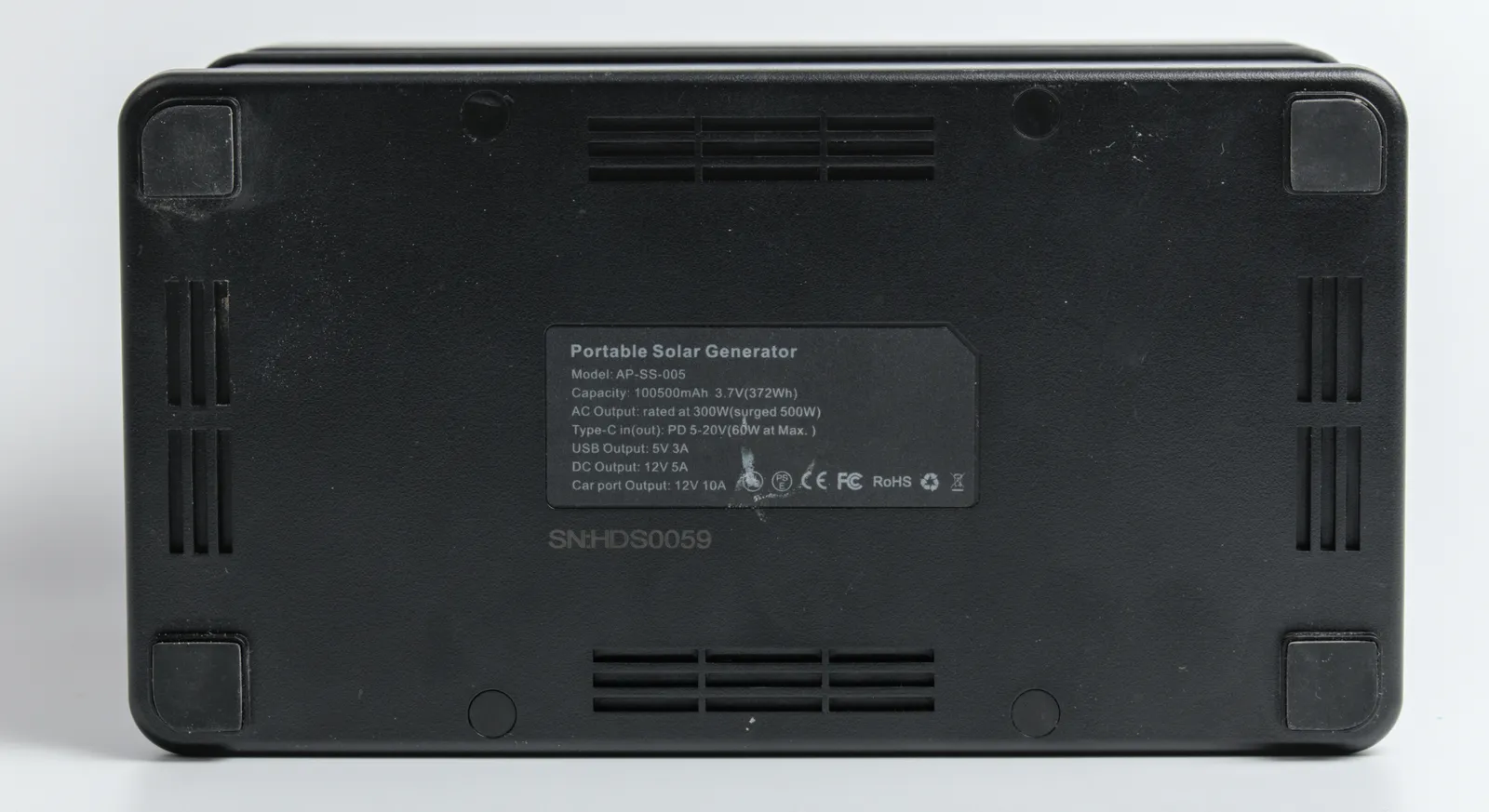
Black Friday falls on 27 November 2026 and Cyber Monday on 30 November. For camper, van and boat electrics, that is the time of year when power stations, lithium batteries, solar panels and inverters show up with crossed-out prices. A sale is a fine moment to buy a component you have already sized. It is a bad moment to decide what you need, because every listing puts a different number in its headline.
This is a researched buying guide, not a hands-on test. It does not name deals or prices; those change by the hour and by store, so check the current price at the retailer yourself. What it gives you is the number to compare in each category, the rule to calculate it, and the parts that should never be chosen by price at all.
Before the sale: know three numbers
Make the decisions before the deal pages open, then use the sale only to pick the cheapest offer that meets them.
- Your daily energy budget in watt-hours. Add up what your loads use in a day. The battery bank sizer turns that into a battery size, the battery runtime calculator shows how long a given battery lasts.
- Your largest AC load in watts. It decides the inverter or power station output. The inverter size calculator adds the start-up surge of motors and compressors.
- Your charging plan. Roof area and sun for solar (solar panel calculator), driving time for a DC-DC charger (charge time calculator).
With these three numbers, a deal either fits or it does not. Without them, the size of the discount ends up making the choice.
The deal check: one number per category
This table is the short version of the guide. The calculations use VoltPlan's planning defaults: 12.8 V nominal for LiFePO4, 80 % usable capacity for LiFePO4 and 50 % for lead-acid, AGM and gel. Your battery's data sheet has the final word.
| Category | Compare this | How to calculate | What the headline hides |
|---|---|---|---|
| Power station | Capacity in Wh, continuous AC watts, cycles to which remaining capacity | price ÷ capacity in kWh | Peak or boost watts instead of continuous watts; cycle counts to different end points |
| LiFePO4 battery | Wh, continuous BMS discharge current, low-temperature charge protection | Wh = Ah × 12.8 V; inverter limit ≈ BMS amps × 12.8 V | Cycle counts without depth of discharge or end-of-life capacity |
| Solar panel | Watts at STC, open-circuit voltage (Voc), dimensions | Panels in series: sum of Voc, plus a cold-weather margin, must stay below the controller's maximum PV voltage | Only the watt figure, no data sheet |
| Inverter | Continuous watts, pure sine wave, idle consumption | DC current ≈ watts ÷ (12 V × 0.9) | Surge watts in the product title |
| DC-DC charger | Output amps, input current, smart alternator support | Driving hours ≈ amp-hours to refill ÷ charger amps | Input current the alternator has to supply |
Power stations
Power station listings lead with big numbers, and not all of them mean what they seem to. Three things to compare:
- Watt-hours, not milliamp-hours. Wh is the energy that matters. A figure in mAh is quoted at the internal cell voltage and cannot be compared across brands. Our Ah to Wh guide explains the conversion.
- Continuous watts, not peak. The continuous rating decides whether your kettle, hair dryer or induction hob runs. Surge figures only cover start-up. Several brands also advertise boost modes that run resistive loads at reduced voltage, so a heater runs slower instead of shutting the unit down; that is not a continuous rating.
- Cycles to which end point. Manufacturers rate cycle life against different thresholds. Jackery specifies the Explorer 1000 v2 at 4,000 cycles to 70 % or more of its capacity, Anker the SOLIX C1000 Gen 2 at 4,000 cycles to at least 80 %. Same cycle count, different promise.
Also check the charging temperature. LiFePO4 power stations charge only at 0 °C and above; Anker lists 0-40 °C for the C1000 Gen 2. A station kept in an unheated garage will not take a charge in a cold spell. Our power station comparison 2026 lines up six current units on these points, including the EcoFlow DELTA 3 Plus.
Worth it on sale if the capacity matches your Wh budget. A larger station at a reduced price is still the wrong purchase if you carry twice the weight on every trip.
LiFePO4 batteries
For a built-in system, the battery is usually the largest single item, and lithium batteries of the same nominal size differ a lot behind the label.
- Convert to Wh. A 12 V LiFePO4 battery has a nominal voltage of 12.8 V, so a 100 Ah LiFePO4 battery stores about 1,280 Wh and a 314 Ah LiFePO4 battery about 4,019 Wh. The Ah to Wh converter does the maths.
- Check the BMS current. The battery management system limits the continuous discharge current. A battery with a 100 A BMS delivers about 1,280 W, which after inverter losses is roughly 1,150 W AC. A 2,000 W inverter on that battery will trip the BMS under full load.
- Read cycle claims in full. A cycle figure only means something with its depth of discharge and end-of-life capacity. Without those, treat it as marketing.
- Low-temperature charge protection. LiFePO4 cells must not be charged below 0 °C. Look for a stated charge cut-off or a self-heating option if the battery sits outside the heated space; see LiFePO4 cold charging.
To compare two offers on lifetime value, divide the price by the energy the battery can store over its life: price ÷ (usable kWh × rated cycles). At the same price, a battery rated for twice the cycles under the same test conditions costs half as much per stored kWh. For weekend use with 40 to 60 cycles a year, cycle life rarely becomes the limit; the warranty period and the manufacturer's support matter more.
Worth it on sale if the data sheet states BMS current, cycle conditions and charge temperature limits. If it does not, the price is not the problem.
Solar panels
- STC watts are a lab figure. Panel ratings are measured at Standard Test Conditions: 1,000 W/m² irradiance and 25 °C cell temperature. On a van roof in November you will see a fraction of that. Size the array with the solar panel calculator, not from the label.
- Voltage decides the controller. Panels in series add their open-circuit voltage, and that voltage rises in cold weather. Keep a margin below the controller's maximum PV voltage; in Victron's naming, a SmartSolar MPPT 100/30 takes up to 100 V from the panels and charges at up to 30 A. Our guide to solar panels in series or parallel shows both layouts.
- Fit before watts. Measure the free roof area and check the panel dimensions and mounting before you compare watts.
Worth it on sale when there is a data sheet with Voc, Isc and dimensions. A listing that only names watts is not enough to plan with.
Inverters
- Continuous rating at a stated temperature. Inverter output drops as the unit gets warm. The continuous rating is the figure to plan with, not the surge figure that is often in the product title.
- Pure sine wave. Compressor fridges, chargers and anything with a motor or a switching power supply want a pure sine output.
- Idle consumption. An inverter left on draws current with no load connected. Over a day that adds up; the data sheet lists it as no-load or idle consumption.
- The DC side is part of the price. A 2,000 W inverter at full load pulls roughly 2,000 ÷ (12 V × 0.9) ≈ 185 A from a 12 V battery. That needs heavy cable, a matching fuse and a battery whose BMS can deliver it. Check the cross-section with the wire gauge calculator before you decide how big an inverter you can afford.
Worth it on sale if the inverter is sized from your real AC loads with the inverter size calculator. The larger unit is not a bargain if it forces a bigger battery and thicker cable.
DC-DC chargers
- Output amps decide how fast the house battery refills while driving; the charge time calculator gives the hours.
- Input current is higher than the output because of losses. Victron, for example, states up to 98.5 % efficiency for the Orion XS 12/12-50A; less efficient units draw more from the alternator for the same output.
- Smart alternator support through a low engine-detection threshold or an ignition/D+ input matters for Euro 5 and Euro 6 vehicles.
Our DC-DC charger comparison 2026 compares seven current units on these points.
Parts you never buy by price
Some parts carry the full current of your system and protect it. Saving here does not show on the receipt, it shows when something fails.
| Part | Why price is the wrong criterion | What to check |
|---|---|---|
| Fuses and fuse holders | A fuse must break a short circuit, not only blow at its amp rating. LiFePO4 batteries deliver very high short-circuit currents. | A stated interrupt rating (AIC) on the data sheet. Blue Sea Systems, for example, rates its MRBF terminal fuses at 10,000 A at 14 V DC and Class T fuses at 20,000 A at 125 V DC. |
| Battery cable | Copper-clad aluminium (CCA) has a higher resistance than pure copper of the same cross-section, because aluminium conducts only about 60 % as well as copper. That means more voltage drop and more heat. | Pure copper, the real cross-section in mm² or AWG, fine-stranded for vibration, a temperature rating. |
| Cable lugs and terminals | A lug that does not match the cable cross-section or the stud size gives a poor crimp and a hot joint. | Tinned copper, marked for the exact cable size and stud diameter, crimped with a tool made for that size. |
How big the main fuse has to be and where it goes is covered in the fuse sizing guide and the fuse size calculator; which fuse type suits a lithium bank is in Class T vs MRBF. Buy these parts from a known manufacturer with a data sheet, in the amount your plan needs, whether or not there is a sale.
How to judge a deal without being fooled
- Compare against the normal price, not the crossed-out one. Check what the unit has cost in recent weeks, across several stores.
- Calculate price per kWh. For batteries and power stations, divide the price by the capacity in kWh. Two offers with different capacities only become comparable this way.
- Check the exact model. Listings often bundle variants, older generations or kits with extras. Compare the model number with the manufacturer's data sheet.
- Do not upsize because of a discount. If your Wh budget is 1 kWh, a 2 kWh station at a lower price per kWh is still more weight and more money than you need.
- Check the return policy. Know how long you have to test a battery or power station at home.
Plan the system first, then shop
The safest way through Black Friday is a finished plan. In the free VoltPlan diagram editor you can draw battery, charger, inverter, solar controller and loads, enter the cable lengths and get cable and fuse sizes for every circuit. The shopping list then tells you exactly which parts the system needs, and you can wait for a fair price on the big items while buying fuses, cable and lugs by specification.
FAQ
Is Black Friday a good time to buy a power station for a camper?
It can be, if you have already worked out your daily watt-hours and your largest AC load. Discounts on power stations are common in November. Compare the offer against the normal price over the past weeks and do not let a discount push you into a bigger unit than your budget in Wh needs.
How do I compare two batteries with different capacities?
Convert both to watt-hours (for LiFePO4: Ah × 12.8 V), then divide each price by its capacity in kWh. For lifetime value, divide the price by usable kWh times rated cycles, as long as both cycle ratings use the same depth of discharge and end-of-life capacity.
What does "4,000 cycles" on a LiFePO4 battery mean?
It is the number of full charge and discharge cycles until the capacity has dropped to a stated level, often 70 % or 80 % of the original. Without that level and the depth of discharge, two cycle figures cannot be compared.
Why is the peak wattage of an inverter or power station not enough?
Peak or surge power is only available for a short moment, to start motors and compressors. Continuous loads such as a kettle or a heater need the continuous rating. Plan with the continuous watts.
Which parts should I not buy on price alone?
Fuses and fuse holders, battery cable and cable lugs. They carry the full current and protect the system. Choose fuses with a stated interrupt rating, pure copper cable of the correct cross-section, and tinned copper lugs that match the cable and stud size.
Are solar panels with higher watts always better?
Only if they fit your roof and your charge controller. Check dimensions and mounting first, then make sure the open-circuit voltage of the panels in series, plus a margin for cold weather, stays below the controller's maximum PV voltage.
This article was created with the assistance of AI.
Ready to Design Your Electrical System?
Use VoltPlan's free electrical system designer to turn these concepts into reality.
Start Your Project