

TV in a Camper: 12 V TV, AC/DC TV or a Home TV on the Inverter?
Which TV suits a van, motorhome or boat: what 12 V and AC/DC TVs are, when a home TV needs an inverter or a DC-DC converter, how much each option takes from the battery, and how to wire and fuse it.
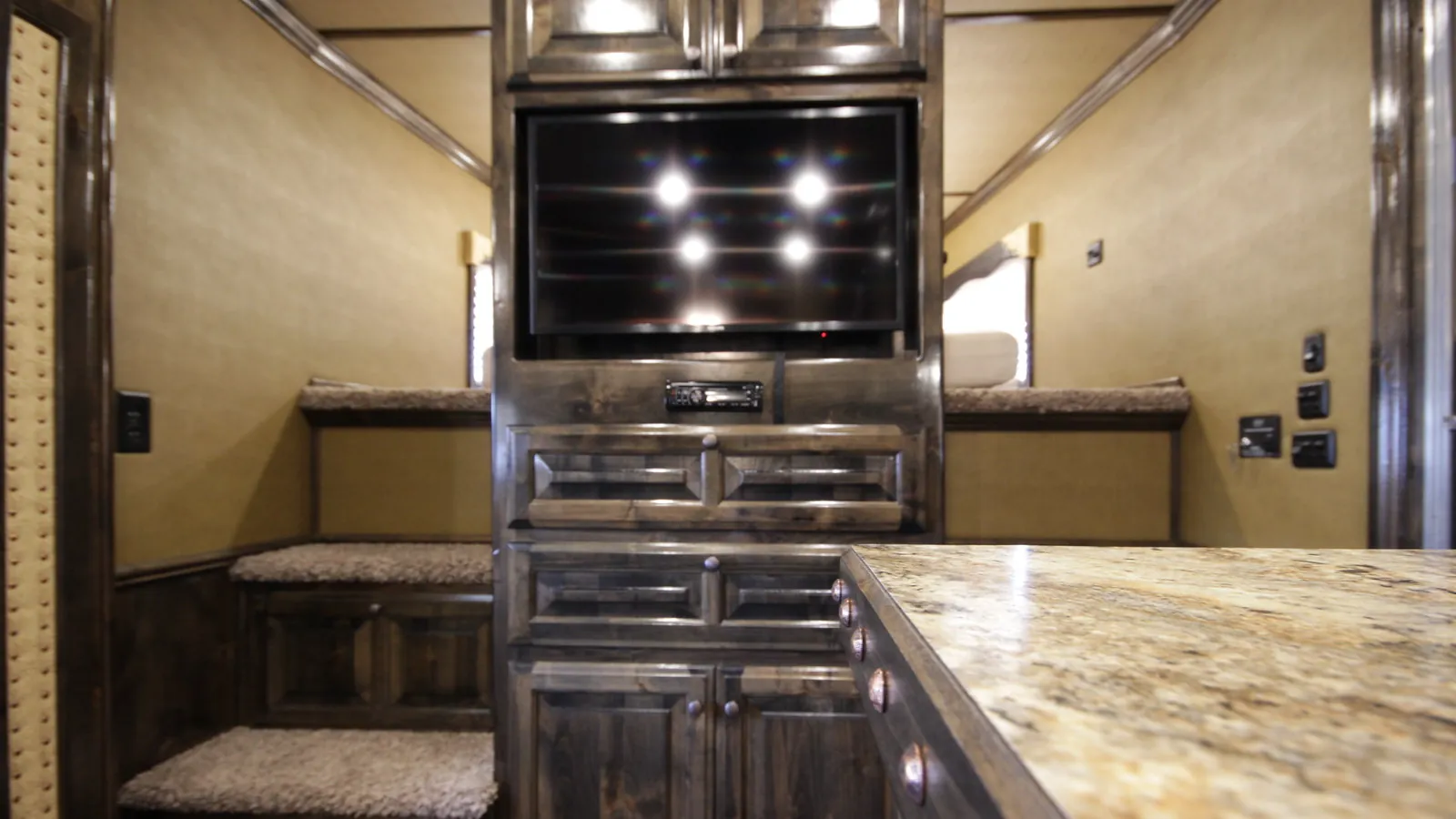
A TV is one of the first comfort upgrades in a van, motorhome or boat, and one of the most common questions behind it is simple: does it have to be a special 12 V TV, or will a normal TV do? This is part 1 of a short series on TV and streaming in a camper. It covers the TV itself: the types, the equipment each one needs, what it takes from the battery and how to wire it. Streaming boxes such as the Fire TV Stick and Apple TV follow in part 2.
This is a researched guide, not a hands-on test. The figures come from the data sheets and manuals of alphatronics, Avtex, LG, Renogy and Victron Energy named below.
The short version
- A 12 V TV needs no special equipment. It runs straight from the 12 V system on a fused circuit. Good ones accept a wide voltage range (the alphatronics SL-24 DW: 10.5 to 30 V) and are protected against reverse polarity.
- An AC/DC TV is a 12 V TV with a mains adapter in the box. On hook-up you can use either input; the 12 V input is usually the better choice.
- A home TV needs a converter. If it has an external adapter, a DC-DC converter with the adapter's output voltage can replace it. If it has a 230 V cord, it needs a pure sine wave inverter.
- The inverter route costs more energy. A TV that draws 28 W at the socket takes at least 32 W from the battery through Victron's smallest Phoenix inverter, and the inverter draws 4.2 W more as long as it is on.
- Fuse a 24-inch TV with 5 A and switch it off completely when you leave. Avtex puts a 5 A fuse in its 12 V lead.
What "12 V TV" and "AC/DC TV" mean
Inside, every flat-screen TV runs on low-voltage DC. The types differ in where the conversion from your power source happens:
- Home TV with a 230 V cord: the power supply is built in. It needs 230 V AC (120 V in North America), so in a camper that means shore power or an inverter.
- Home TV with an external adapter: many small TVs and TV monitors come with a laptop-style power brick. LG's 24TQ510S-PZ, for example, has an adapter for 100 to 240 V AC with a 19 V, 2.1 A DC output. The TV runs on DC, but on 19 V, not on 12 V.
- 12 V TV (camping TV): the DC input is designed for vehicle voltage. alphatronics specifies 10.5 to 30 V DC for the SL-24 DW, so the same set runs on 12 V and 24 V systems. It has reverse-polarity and overvoltage protection and an ECE R10 approval, the UN regulation for electromagnetic compatibility in vehicles.
- AC/DC TV: a 12 V TV that also comes with a mains adapter. Avtex sells its caravan TVs for 240 V AC as well as 12 V and 24 V DC; older alphatronics manuals list a DC adapter and a mains cable in the box. In North America, Jensen lists its RV TVs for 12 V DC power and sells separate 110 V models.
So "AC/DC" does not mean the TV has two power supplies. It is a DC TV with an adapter for when you have a mains socket.
The voltage problem with "12 V"
A 12 V system is not at 12 V. While a charger, solar controller or DC-DC charger charges a LiFePO4 or AGM battery, it usually sits at around 14.2 to 14.6 V. Under load with a nearly empty battery, it can drop below 12 V at the end of a long cable. A truck or a 24 V boat system runs at twice that.
A TV built for vehicles copes with that range: 10.5 to 30 V covers every 12 V and 24 V system. A TV whose input is only rated "12 V", for example a cheap set with a 12 V mains adapter, may not. Check the input range in the manual or on the label before you connect it to the battery. If the maker gives no range above 12 V, a voltage stabiliser in front of it (a 12 V to 12 V DC-DC converter rated for the TV's current) keeps the voltage constant. The same applies to adapter-based home TVs: the replacement voltage must match the adapter's output exactly.
TVs compared: maker values
| TV | Power input | Power draw | Built for vehicles |
|---|---|---|---|
| alphatronics SL-24 DW (24") | 10.5-30 V DC | 18 W (EU label), standby below 0.5 W | yes: reverse-polarity and overvoltage protection, ECE R10 |
| Avtex AV249TS (24") | 12 V/24 V DC, 240 V AC | up to about 3 A at 12 V (Avtex, for its low-power range) | yes: reverse-polarity protection, isolating switch, 5 A fuse in the 12 V lead |
| LG 24TQ510S-PZ (24" TV monitor) | adapter 100-240 V AC, output 19 V DC, 2.1 A | 28 W typical, 0.4 W off | no 12 V input |
Sources: alphatronics SL-24 DW data sheet (March 2026), Avtex catalogue 2024 and support FAQ, LG UK product specifications. The EU label value is the power in normal picture mode; brighter settings, the speakers at high volume and USB devices powered by the TV add to it. Prices change often, so check the current price at the retailer.
A 12 V TV costs more than a home TV of the same size. What you pay for is the wide input range, the protection circuits, the 12 V lead and, at alphatronics, vibration and climate testing. For many vans, a 12 V TV is still the simpler and more efficient choice.
Which equipment you need
1. 12 V or AC/DC TV: nothing special. A fused 12 V circuit, ideally with its own switch, and the 12 V lead from the box.
2. Home TV with an external adapter: a DC-DC converter that makes exactly the adapter's output voltage (19 V for the LG above), delivers at least the adapter's rated current (2.1 A, so 3 A or more), accepts the full 12 V system range at its input and fits the TV's plug with the right polarity. LG does not specify DC operation from a converter, so check the warranty terms first.
3. Home TV with a 230 V cord: a pure sine wave inverter. VoltPlan's inverter calculator treats TVs as electronics that need pure sine. A 24- to 32-inch TV runs on a small inverter; Victron's Phoenix 12/250 is rated 250 VA. If your camper already has a larger inverter for a coffee machine or a kettle, such as Renogy's 2000 W pure sine wave inverter from our Renogy van build, the TV can run on it, but read on before you leave it on for the TV alone.
What each option takes from the battery
Every conversion step costs energy. A mains adapter like LG's 40 W unit must reach at least 87.6 % average efficiency under EU Regulation 2019/1782. Victron's Phoenix 12/250 reaches at most 87 % and draws 4.2 W with no load (0.8 W in its ECO mode). At 30 W, a 250 VA inverter runs well below its best point, so the real loss is higher.
An example evening of 3 hours, converted at 12.8 V:
| Setup | While watching | 3 hours | Extra |
|---|---|---|---|
| 12 V TV, alphatronics SL-24 DW | 18 W | 54 Wh (4.2 Ah) | standby below 0.5 W |
| 12 V TV, Avtex at its maximum | up to about 3 A | up to 9 Ah | isolating switch |
| Home TV, 28 W, via inverter | at least 32 W | at least 96 Wh (7.5 Ah) | 4.2 W while the inverter is on |
The idle draw is the trap. An inverter left on for 24 hours just for the TV uses 4.2 W × 24 h = 101 Wh, which is more than the 12 V TV uses in an evening. A large inverter costs more: Renogy states 1.3 A with no load for its 2000 W model, about 31 Ah in 24 hours. Switch the inverter off after watching, or use its ECO mode.
Standby counts too: below 0.5 W is still up to 12 Wh a day. The isolating switch on the TV or a switch in its circuit removes it. Enter your TV with its watts and hours in the battery runtime calculator next to the fridge and the lights to see the effect on your battery.
Wiring a 12 V TV
Use the supplied lead or hardwire it. Avtex recommends its own lead with the cigarette-lighter plug and warns that adapters and direct battery connections are where polarity mistakes happen. Its TVs protect themselves against reverse polarity; not every TV does. A fixed connection with a proper connector is more reliable than a 12 V socket whose plug can work loose while driving.
Fuse it with 5 A. A 24-inch 12 V TV draws about 1.4 to 3 A. 125 % of 3 A is 3.75 A, so 5 A is the next standard size, and it matches the fuse in Avtex's lead. The fuse sits close to the battery positive or in the fuse box that feeds the circuit. The fuse size calculator applies the same rule to any TV, and our fuse sizing guide explains where each fuse goes.
Size the cable for the voltage drop. At 3 A and 5 m from the fuse box to the TV, the voltage drop at 12 V is 4.5 % with 1.0 mm², 3.0 % with 1.5 mm² and 1.8 % with 2.5 mm² (VoltPlan wire gauge calculator, both conductors counted). A TV that accepts 10.5 V tolerates a few percent, but the drop adds up with a low battery. Check your own length in the wire gauge calculator, which opens with this example.
Give it a switch. Avtex points out that many TVs only go to standby with the remote and fits its sets with an isolating switch. Without one, a switch in the circuit or a switchable output of the distribution box does the same job.
Secure it for driving. A TV on a wall bracket must not swing or fall off while driving. Use a bracket that locks or take the TV down before you set off.
On hook-up
On a campsite with shore power, the battery charger keeps the 12 V system up. A 12 V TV can therefore stay on its 12 V circuit; you do not need to change to the mains adapter. A home TV runs straight from a 230 V socket on hook-up, without the inverter and its losses. How the hook-up feeds your sockets and the charger is explained in our shore power guide.
Plan it in the diagram
Add the TV in the free VoltPlan diagram editor: a 12 V TV as a DC load with its watts and daily hours, or a home TV as an AC load behind the inverter. The editor sizes the cable and fuse for the circuit, puts the TV into the power budget and warns if an inverter is too small or not pure sine.
Next in this series
- Part 2: Fire TV Stick, Apple TV and other streaming boxes on 12 V: how they are powered and how much they draw.
- Part 3: internet for streaming: what LTE and 5G routers and Starlink take from the battery.
- Part 4: satellite and DVB-T2 reception: the power of the dish, the receiver and the antenna amplifier.
FAQ
Can I use a normal TV in a camper?
Yes. A home TV with a 230 V cord runs on shore power or on a pure sine wave inverter. A home TV with an external adapter can also run on a DC-DC converter that delivers the adapter's exact output voltage. Both ways cost more energy than a 12 V TV and are not covered by the maker's specifications for vehicle use.
What is an AC/DC TV?
A TV with a 12 V (often also 24 V) DC input that also comes with a mains adapter. Avtex, for example, sells its caravan TVs for 240 V AC and 12 V or 24 V DC. Inside, the TV runs on DC; the adapter is only for mains sockets.
How much power does a 12 V TV use?
A 24-inch 12 V TV draws about 18 to 36 W. alphatronics gives 18 W on the EU label for the SL-24 DW, and Avtex states up to about 3 A at 12 V for its low-power range. Three hours of watching uses about 4 to 9 Ah.
Do I need an inverter for a TV in a camper?
Only for a TV with a 230 V cord. A 12 V or AC/DC TV runs straight from the 12 V system. An inverter just for the TV costs at least the conversion loss and its idle draw, 4.2 W for Victron's Phoenix 12/250.
What fuse does a 12 V TV need?
For a 24-inch TV, 5 A. Avtex fits a 5 A fuse in its 12 V lead, and 125 % of the 3 A maximum rounds up to 5 A. Larger TVs need the fuse for their own maximum current.
Can the charging voltage damage a 12 V TV?
A TV built for vehicles is designed for it: alphatronics specifies 10.5 to 30 V and overvoltage protection. A TV rated for 12 V only, without a stated range, can be at risk at 14.2 to 14.6 V while the battery charges. Check the input range first or use a voltage stabiliser.
This article was created with the assistance of AI.
Ready to Design Your Electrical System?
Use VoltPlan's free electrical system designer to turn these concepts into reality.
Start Your Project